Latest News

Breathing Easy: The Essential Role of Indoor Air Quality in Operational and Human Health

Breathing Easy: The Essential Role of Indoor Air Quality in Operational and Human Health

Breathing: it’s the most natural process, a rhythm we partake in nearly 20,000 times a day, often without a second thought. Yet, the quality of air we inhale is essential – not just to individual health – but to the operational efficiency and safety in spaces where humans work. Indoor air quality (IAQ) has emerged as a silent yet formidable factor influencing facility management, from cognitive function to complex machinery performance.

Importance of Indoor Air Quality

At its core, IAQ encapsulates the condition of air within and around buildings, directly impacting the health, comfort, and productivity of its occupants.

The Environmental Protection Agency (EPA) underscores IAQ’s importance, noting that Americans, on average, spend approximately 90% of their time indoors, where the concentrations of some pollutants are often 2 to 5 times higher than typical outdoor concentrations​​.

This statistic alone illuminates the imperative of pristine indoor air, a necessity further magnified in places such as data centers, hospitals, and educational institutions.

Data centers, for instance, confront the dual threat of particulate and gaseous contamination, making the goal of improving indoor air quality in a data center a top priority. These pollutants not only compromise the health of those working within but also threaten the very essence of these facilities: the servers and hardware they house. Poor IAQ can lead to overheating, static buildup, and dust accumulation, jeopardizing critical IT infrastructure and leading to costly downtimes. A report by the Ponemon Institute highlights the staggering cost of data center outages, averaging $9,000 per minute, with environmental factors like poor indoor air quality being significant contributors​​.

Hospitals, centers of health and recovery, encounter their own set of IAQ challenges, magnified by the intrinsic need for sterile environments. Here, the stakes are heightened, as poor IAQ can significantly impact patient recovery and infection control. The World Health Organization (WHO) emphasizes the heightened risk of healthcare-associated infections (HAIs) in environments with compromised air quality, affecting 1 in 10 patients during their stay​​. The implications extend beyond patient well-being, straining healthcare systems and elevating operational costs.

The story is similar in the context of educational institutions, where the dense populations create a complex set of air quality challenges. The American Lung Association points to IAQ as a crucial factor affecting not only student health but also their academic performance. Studies demonstrate a direct correlation between improved IAQ and enhanced cognitive functions, including memory, attention, and speed of processing, underscoring the importance of clean air in fostering an optimal learning environment​​.

Investment in high-quality air filtration systems not only mitigates these risks but also champions sustainability and energy efficiency. By reducing the burden on HVAC systems and extending the lifespan of equipment, our industrial air filtration solutions exemplify how cutting-edge technology can harmonize health, efficiency, and environmental stewardship.

Breathe Easier with K&N

At K&N Global Filtration, we’re dedicated to improving indoor air quality through innovative air filter services and technology that sets a benchmark. Our solutions are an investment in the future of the planet and the health of its inhabitants. K&N’s approach to air filtration is about meeting today’s needs and anticipating tomorrow’s challenges to ensure that facilities can breathe easier with K&N’s industrial air filters. The Original Red Washable, Reusable Filter ™ offers:

  • Enhanced Efficiency: With a focus on high particulate capture rates, K&N filters are capable of removing smaller particles more effectively than standard filters, which is crucial for protecting sensitive equipment in data centers and ensuring sterile air in hospitals.
  • Longevity and Sustainability: K&N’s commitment to sustainability is evident in its washable and reusable filter designs, reducing waste and offering a cost-effective alternative to disposable filters. This feature not only lowers operational costs but also allows you to clean your filters as often as your facility needs.
  • Cost-effectiveness: The long-term savings in maintenance, energy efficiency, and equipment protection make K&N air filters a financially savvy choice for facilities prioritizing IAQ.

Embracing K&N industrial filters marks a significant step toward enhancing both the indoor air quality and operational efficiency of your facility. Select from K&N’s extensive range of filters, including MERV 8 filters available now, with MERV 11 and 13 options coming soon. Options to start your facility’s transition from traditional disposable filters to K&N’s washable and reusable alternatives. 

Looking ahead, K&N is committed to driving advancements in air filtration performance, reflecting a broader vision for the future of indoor air quality management, and aligning with global trends toward more sustainable, efficient, and effective solutions. By developing long-lasting, washable, and reusable filters, the K&N team is significantly improving indoor air quality while also reducing waste and supporting environmental initiatives.

Does your single-use filter do that? To showcase our confidence in the effectiveness of K&N air filters, we’re willing to jump-start your transition by offering up to 50 free filters for a pilot program in your facility. This initiative allows you to witness firsthand the impact K&N filters have on your air quality and overall facility performance​. Find out how to start your pilot at www.knglobalfiltration.com/pilot.

Exploring Air Filtration Systems From the Rooftop to the Data Vault

Exploring Air Filtration Systems From the Rooftop to the Data Vault

Exploring the Significant Impact of Air Filtration Systems Across Every Part of the Data Center

In the complex ecosystem of data centers, air filtration systems are emerging as a fundamental component, pivotal to maintaining operational efficiency and reliability. This essential system often reduced to a line item on a budget sheet, plays a key role in safeguarding data centers from a myriad of airborne contaminants that can significantly impair equipment performance and longevity. Let’s explore the significant impact of air filtration systems across various sections of a data center, highlighting its indispensability in ensuring seamless operations.

1. High upon the Rooftop

Perched atop the data center, rooftop air handling units are a critical component of building cooling systems and serve as the front line in the battle against external pollutants. Here, air filtration systems stand guard, filtering out a barrage of contaminants before they infiltrate the building. The filters in these RTU systems are the first line of defense, ensuring that cooling mechanisms breathe in purity and exhale efficiency.

The stakes are high; a study by the Uptime Institute revealed that implementing efficient air filtration systems can lead to increased energy savings, significantly impacting operational costs. Additionally, by removing dust and impurities, these systems contribute to a 5-10% improvement in Power Usage Effectiveness (PUE), further translating into reduced energy consumption and environmental impact. It’s a double whammy of cost savings and sustainability.

2. Inside the Office Space

Beneath the roof lies the heartbeat of the data center—the people. The correlation between air quality and productivity is well-documented, with the Environmental Protection Agency (EPA) noting that indoor air can be two to five times more polluted than outdoor air, a statistic that amplifies the need for impeccable air filtration systems in workspaces.

But the impact goes beyond compliance. A study by the Lawrence Berkeley National Laboratory underscores this connection. They found that improved indoor air quality led to an increase in worker productivity, which for a company with 1,000 employees translates to an annual benefit of over $500,000. Additionally, it resulted in a reduction in employee sick leave, further contributing to cost savings and improved morale.

3. The Data Vault

Within the core of the data center, amidst the silicon and circuits, the air holds a silent sway over destiny. The data vault demands an air quality that brooks no compromise. Here, minuscule microns wield the power to disrupt and degrade, posing threats to data integrity. A single dust particle smaller than 3 microns, smaller than the width of a human hair, can cause permanent damage to sensitive server components, leading to data loss and hardware failure.

This reality demonstrates the critical role of rigorous air filters within the walls of the data hall. It’s not an option, but a requirement to protect and preserve, necessitating relentless vigilance and regular maintenance of filters to ensure complete protection.

Implementing efficient air filtration in data centers can reduce hardware failures due to contamination, translating to improved data security, uptime, and overall system reliability, safeguarding the very assets entrusted to our care.

Uptime Institute Global Data Center Survey 2022

4. The Electrical and Power Room

The electrical room, the pulse of a data center, thrives on the purity of its surroundings. Like the data vault, seemingly innocuous particulate matter can precipitate chaos within the intricate web of power systems. Data center outages can cost thousands of dollars per minute. As Ponemon found, a single unplanned data center outage can cost an average of $7,900 per minute, a stark reminder of the economic imperative to maintain clean air zones around critical power infrastructure.

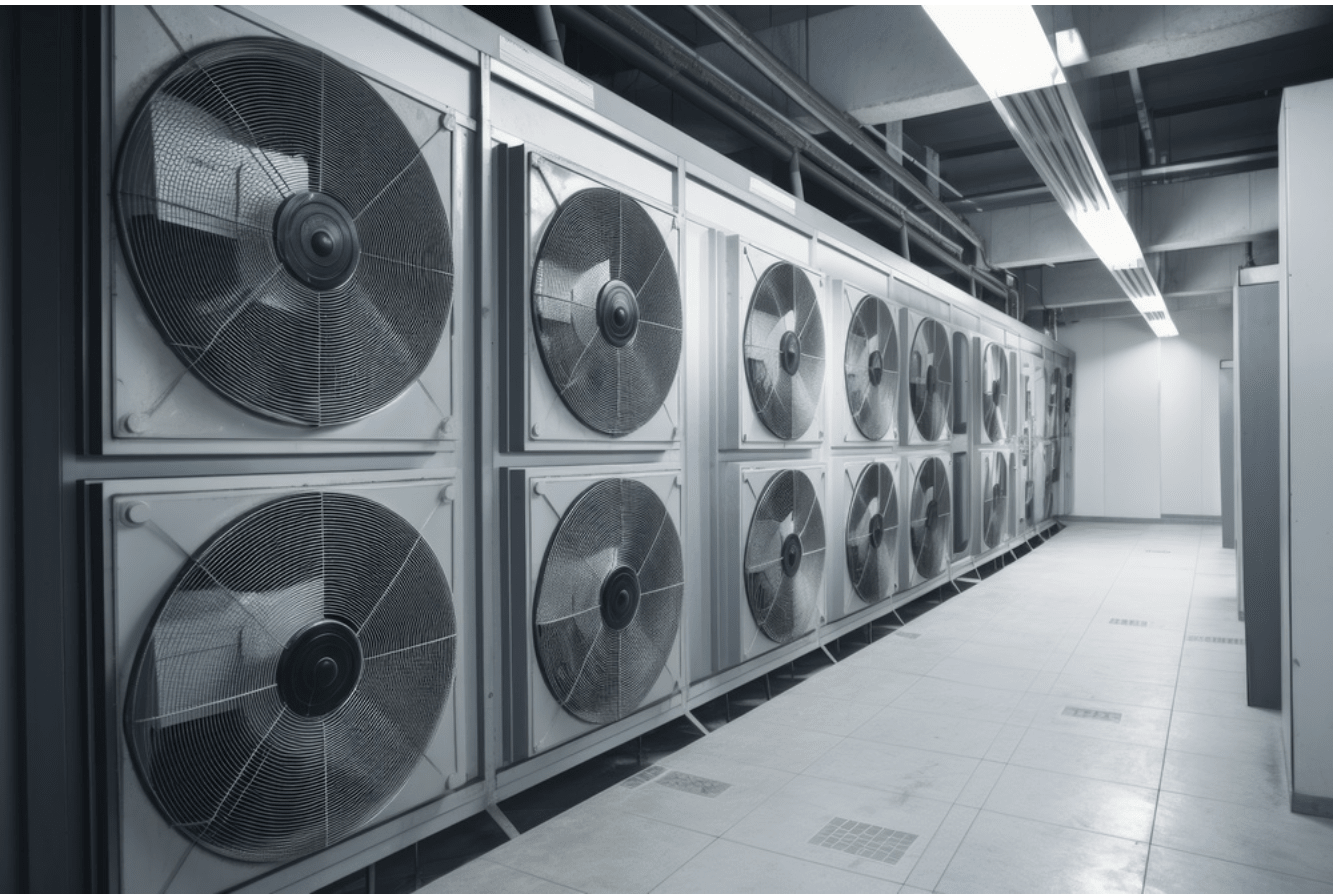
ventilation system for data center, with numerous fans and filters keeping the air clean and cool, created with generative ai

This statistic resonates beyond the data center walls, reflecting the broader vulnerability of modern society to power disruptions. From hospitals relying on life-saving equipment to financial institutions processing critical transactions, clean air ensures the smooth flow of electricity that underpins our connected society.

Through meticulous air filtration, data center operators can avert the specters of overheating and failure, safeguarding the intricate web of connections that power operations.

5. Modular Data Centers

Here, the air itself presents a formidable foe, teeming with dust, sand, and other environmental nasties that threaten the delicate dance of computing power. Unlike their urban counterparts, these outposts cannot rely on frequent filter replacements or readily available technicians. The air filtration systems guarding these digital outposts must be more than just adaptable; they need to be tenacious and enduring.

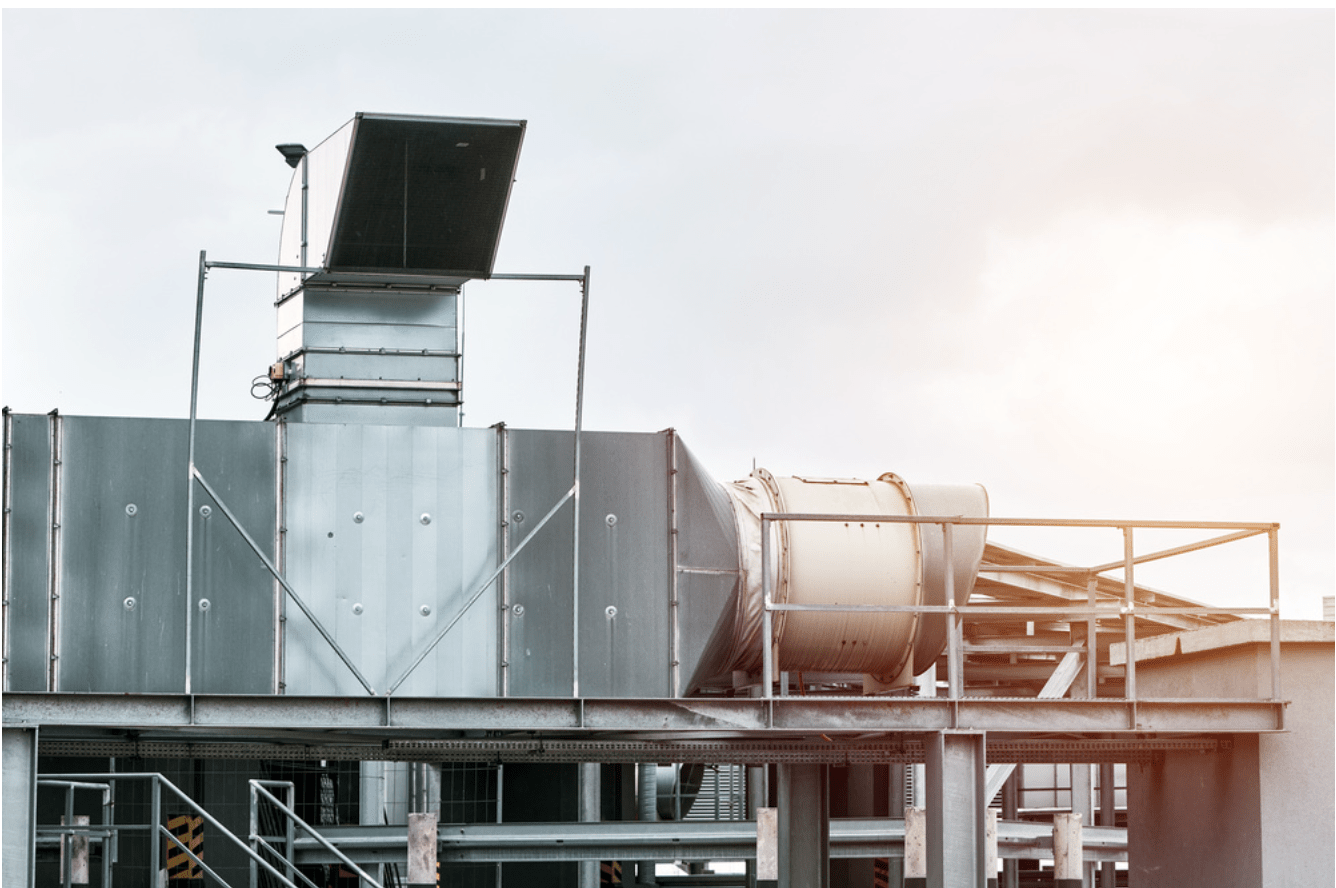
A view of the office skyscraper’s flat roof with a ventilation system, Generative AI.

Imagine a desert sun beating down, its relentless heat warping the air. Or picture a windswept mountain peak, blasting the system with chilling winds and airborne debris. This is the harsh reality for edge data center air filtration. Yet, through innovative technologies like self-regulating filters and remote monitoring systems, these unsung heroes rise to the challenge. They not only neutralize contaminants but also maintain optimal airflow, ensuring efficient cooling even in the face of adversity.

Studies by the Uptime Institute reveal that improper air filtration can contribute to higher energy consumption in data centers. In remote locations, where every watt counts, this inefficiency becomes a critical concern. By delivering both superior filtration and exceptional energy efficiency, long-lasting air filters ensure reliable computing power without sacrificing sustainability.

How can K&N Make a Difference For Your Air Filtration Systems?

K&N Global Filtration is transforming the data center landscape with cutting-edge industrial air filtration solutions, setting a new standard for operational efficiency and sustainability. Unlike conventional single-use filters that contribute to environmental waste, K&N has offers The Original Red Washable, Reusable Filter™, a new approach with washable and reusable industrial air filters, designed to last years.

K&N’s air filtration systems technology, engineered for optimal airflow and minimal restriction, reduces energy consumption at the fan level in data centers. This leads to significant energy savings and a swift ROI by reducing the frequency of filter replacements, lowering operational costs, and minimizing the carbon footprint—all leaps toward sustainable data center management. With a variety of sizes and MERV ratings that adhere to UL 900, ULC S111, ASHRAE 52.2, and ISO 16890 standards, K&N caters to diverse data center needs.

K&N’s sustainable air filtration solutions also represent a commitment to environmental stewardship and operational excellence. By drastically reducing waste and enhancing energy efficiency, K&N empowers data centers to operate more sustainably, without sacrificing performance. This commitment to innovation and sustainability positions K&N as a leader in air filtration, driving the data center industry toward a greener future.

The story of commercial air filtration unfolds as a testament to its critical role, surpassing its deceptive simplicity as a budgetary footnote to become a cornerstone of efficiency, sustainability, and reliability.

Contact us today and see if our sustainable air filtration solutions can help defend your Data Center air and your Data Center bottom line.  

Why Hospitality Leaders Are Rethinking Their HVAC Filter Programs

Why Hospitality Leaders Are Rethinking Their HVAC Filter Programs

In hospitality, every detail matters.

Guests notice comfortable temperatures, clean indoor air, quiet spaces, and consistent airflow — even if they never think about the HVAC system making it all possible.

Behind the scenes, however, engineering and facilities teams face a growing challenge: delivering exceptional guest comfort while controlling operating costs and supporting corporate sustainability goals.

As labor costs rise, budgets tighten, and ESG initiatives become more important, many hotels, resorts, casinos, and entertainment venues are beginning to ask an important question:

Is our disposable HVAC filter program still the best long-term solution?

Increasingly, the answer is no.

Guest Comfort Starts Behind the Scenes

Every guest experience depends on building performance.

An HVAC system that delivers consistent airflow helps maintain comfortable guest rooms, inviting lobbies, productive conference spaces, and enjoyable restaurants and entertainment venues.

When filtration restricts airflow or requires frequent replacement, facility teams spend more time reacting to maintenance needs instead of focusing on the overall performance of the property.

Reliable filtration supports consistent HVAC operation, helping properties maintain the indoor environments guests expect throughout their stay.

Hospitality Has Already Proven That Reusable Solutions Work

Not long ago, nearly every hotel bathroom looked the same.

Rows of single-use shampoo bottles, tiny conditioner bottles, miniature soaps, and individually packaged toiletries were considered standard. Every guest room turnover meant replacing partially used products, generating enormous amounts of plastic waste while creating additional labor for housekeeping teams.

Today, that standard has changed.

Walk into almost any major hotel brand, and you’ll find wall-mounted dispensers filled with shampoo, conditioner, body wash, and hand soap. Those refillable containers have become commonplace across the hospitality industry.

The change wasn’t driven by sustainability alone.

Hotels quickly realized they could reduce purchasing costs, minimize plastic waste, simplify housekeeping operations, decrease inventory management, and maintain a consistent guest experience — all at the same time.

What was once viewed as a small operational change became a large-scale industry transformation.

More importantly, it changed how hospitality leaders think about recurring consumables.

Instead of asking, “What does this item cost to buy?” operators began asking, “Is there a smarter, more sustainable way to manage this over the long term?”

That mindset is now expanding beyond guest amenities.

Forward-thinking hospitality organizations are evaluating every recurring product throughout their facilities to determine where similar improvements can be made.

HVAC Filtration Is Becoming the Next Opportunity

Disposable HVAC filters follow a remarkably similar pattern to the toiletries hospitality has already moved away from.

Facilities purchase them.
Install them.
Remove them.
Throw them away.
Then purchase them all over again.

The cycle repeats several times every year, creating ongoing purchasing costs, maintenance labor, transportation, inventory requirements, and landfill waste.

Just as refillable amenity dispensers replaced millions of single-use plastic bottles, washable HVAC filters replace the constant cycle of disposable filtration.

Rather than throwing filters away every few months, engineering teams simply clean them, reinstall them, and return them to service.

It’s the same operational philosophy hospitality has already embraced throughout guest rooms — reduce waste, simplify operations, and maximize the value of assets already in use.

For many hotels, resorts, and casinos, reusable filtration is becoming the next logical step in that journey.

The Hidden Cost of Disposable Filters

Most hospitality operators know the purchase price of a filter.

Fewer know the true cost of replacing hundreds or even thousands of filters across a property every year.

Each replacement requires:

Sustainability Is Becoming Part of the Guest Experience

Today’s travelers increasingly value businesses that demonstrate environmental responsibility.

Many hotel brands have established ambitious sustainability goals focused on reducing waste, lowering energy consumption, and minimizing environmental impact.

Guests may not see a property’s HVAC system, but they increasingly recognize the choices hotels make to reduce waste — from refillable toiletries and water conservation programs to recycling initiatives and energy-efficient buildings.

Behind-the-scenes infrastructure improvements are becoming just as important as guest-facing sustainability efforts.

Washable, reusable HVAC filters help hospitality organizations extend those sustainability initiatives into the mechanical room by dramatically reducing landfill waste while supporting long-term operational efficiency.

More Efficient Buildings Start with Better Airflow

HVAC systems account for one of the largest energy expenses in most hospitality facilities.

Maintaining efficient airflow is essential for keeping guestrooms comfortable while controlling operating costs.

Filters with lower pressure drop allow HVAC systems to move air more efficiently, reducing unnecessary strain on fans and helping support overall system performance.

When multiplied across dozens or even hundreds of air handling units, improvements in airflow efficiency can contribute to meaningful operational savings over time.

Helping Engineering Teams Do More with Less

Like many industries, hospitality continues to face maintenance staffing challenges.

Engineering teams are expected to support complex facilities while responding quickly to guest needs and minimizing operational disruptions.

Reducing routine maintenance can free valuable time for preventative maintenance and higher-priority building improvements.

Instead of continually replacing disposable filters, reusable filtration allows teams to wash, dry, and reinstall existing filters as part of planned maintenance schedules.

The result is a simpler, more sustainable filtration program that reduces recurring purchasing and waste while helping engineering teams operate more efficiently.

A Long-Term Investment in Operational Excellence

Hospitality leaders are increasingly evaluating building systems based on total lifecycle value rather than initial purchase price alone.

Questions now include:

  • Can we reduce recurring maintenance costs?
  • How can we minimize landfill waste?
  • Are there opportunities to improve HVAC efficiency?
  • Can we simplify maintenance without sacrificing guest comfort?
  • How can our facilities contribute to our company’s sustainability goals?

These conversations are reshaping how hospitality organizations approach building operations.

The Future of Hospitality Filtration

The hospitality industry’s transition from single-use toiletries to refillable dispensers demonstrates something much bigger than a sustainability initiative; it reflects a new way of thinking.

When a product is used repeatedly throughout a property’s lifecycle, operators increasingly ask whether it needs to be disposable at all.

That same question is now being applied to HVAC filtration.

Exceptional hospitality isn’t created only in guestrooms or restaurants.

It begins with the systems operating behind the scenes every day.

As hotels, resorts, casinos, and entertainment venues continue investing in operational efficiency and sustainability, HVAC filtration is becoming another opportunity to reduce waste, lower operating costs, and improve long-term building performance.

At K&N Global Filtration, we believe reusable HVAC filters represent the next evolution in hospitality filtration, much like refillable amenity dispensers redefined guest room sustainability.

Sometimes the most meaningful improvements are the ones guests never see, but every property benefits from.

Ready to Act?

Rethink Your Filtration Strategy

Contact K&N Global Filtration to learn how washable, reusable HVAC filters can help reduce waste, improve operational efficiency, and support your property’s sustainability goals.

Leadership in Energy and Environmental Design (LEED) Waste Performance Guide

Leadership in Energy and Environmental Design (LEED) Waste Performance Guide

Use K&N Global Filtration’s reusable industrial air filters to claim additional LEED points, up to 8 in the waste practices section, which is a prerequisite.

Measure the total weight of waste (in lbs., kg, or tons) that is generated and the total weight that is diverted from landfills and incineration facilities for one full year or from a waste analysis. Exclude any facility renovation waste.

To document the weight of disposable vs reuseable filters, before installing K&N filters, weigh a representative sample of legacy disposable filters from each air handling unit (AHU) operated in the building, when they have reached the end of their service life, as they are removed before they are sent to landfill. Multiply the weights of individual used filters by the number of filters installed in each AHU to derive the total weight of filters being sent to landfill for the building. This is the additional diversion weight for the calculation below.

Input generated and diverted waste totals and calculate a waste performance score for the project. LEED points for this prerequisite are awarded for waste performance scores above 40, as follows:

LEED Points for Waste Performance

Waste Performance ScoreLEED Points
40 3
444
575
696
827
948

Waste performance score calculation

To calculate waste performance score, the following data is required:

  • Total waste generated (lbs., kg, or tons)
  • Total waste diverted (lbs., kg, or tons) – ADD the calculated weight of used disposable filters to the value derived before adopting K&N reusable filters.
  • Weighted occupancy

The waste generated is converted into an average daily waste generated per occupant, using the following equation:

Average daily waste generated = (waste generated / # days associated with waste total) / occupancy

The waste diverted is converted into a daily waste undiverted per occupant, using the following equation:

Daily waste undiverted per occupant = (waste diverted / # days associated with waste total) / occupancy

The daily undiverted waste is calculated using the following equation: 

Daily undiverted waste per occupant = daily waste generated per occupant– daily waste diverted per occupant

The project’s calculated average daily waste generated per occupant AND average daily waste undiverted per occupant are input into the waste scoring function to calculate the waste performance score. 

Pro Tip

Since these equations uniquely normalize for occupancy, removing HVAC filters from the waste stream will have an outsize impact on lightly occupied buildings – like data centers. 

If you’d like to learn more about LEED credits, visit www.usgbc.org/credits.

K&N Global Filtration Debuts First-of-its-Kind Reusable High-Performance Air Filters for Data Centers and other Industrial Applications

K&N Global Filtration Debuts First-of-its-Kind Reusable High-Performance Air Filters for Data Centers and other Industrial Applications

Affirming its commitment to sustainability, K&N’s reusable air filtration solutions, with their long lifecycle, are highly customizable to meet exacting customer requirements

Riverside, CA, January 16th, 2023 – K&N Global Filtration is disrupting data center and other industrial application industries with the introduction of washable, reusable, sustainability-focused air filtration solutions. The new, sustainable high-performance air filters are highly customizable to meet unique customer specifications and to ensure the highest performance, reduce waste and maximize savings.

Proper air filtration is critical to data centers, as dust buildup can lead to fan failures, overheating and – in worst cases – costly disruptions in service. Dirty air filters reduce operational efficiency and increase energy consumption and costs. As a safeguard, data centers and other mission-critical facilities change air filters often. These disposable filters end up in landfills across the globe, where the filter media, cardboard and metal components pile up – not anymore. 

“Most are unaware of the negative impact that single-use filters have on the environment. As a result of dumping these filters in landfills, harmful greenhouse gasses and carbon dioxide are released into the atmosphere,” stated Randy Bays, CEO of K&N Global Filtration. “Our proprietary air filtration technology is as sustainable as it gets with zero waste”. Just one K&N filter replaces several years worth of disposable filters. What’s more, our air filtration products are highly customizable to meet our customers’ exacting size needs without sacrificing the performance our customers have come to know and expect.”

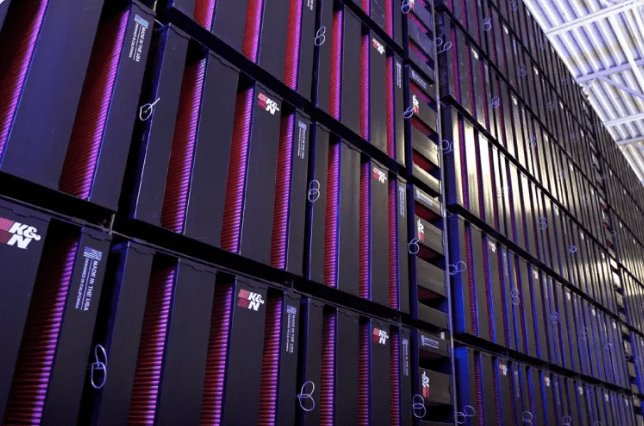
As the only washable and reusable filter of its kind on the market today, K&N Global Filtration’s filters are available in V-bank and panel designs. The high airflow and low restriction filters are fully customizable to reduce energy consumption and increase performance. The filters are also easy to clean, requiring no cleaning solvents, pressure washers or hot water. 

K&N Global Filtration air filters are reusable and sustainable in every way, from the product to the packaging. The company’s filters are shipped in corrugate-free, reusable, returnable crates, which are manufactured from partially recycled materials. K&N was born out of an unwavering commitment to zero waste and exceptional performance in every product developed and every service delivered. The company is committed to a more sustainable strategy for data centers and industrial applications, and a more sustainable future for the planet.

Be sure to visit K&N Global Filtration’s booth #6 in The Hub at PTC’23 to find out more. To learn more about K&N Global Filtration, visit knglobalfiltration.com or email at [email protected]. 

###

About K&N Engineering

K&N Global Filtration is the Industrial Group of the world-famous automotive air filter manufacturer K&N. Expanding on its 50-year legacy of performance and innovation, K&N Global Filtration is revolutionizing the data center and industrial application markets with sustainability-focused air filtration solutions. The company’s high-performance, washable, reusable air filtration products are proven to reduce power consumption, drive economic efficiency and provide sustainable solutions to data centers and industrial markets across the globe. To learn more about K&N Engineering’s Industrial Group, visit knglobalfiltration.com or email at [email protected].

Phil the Filter
Chat Now